About the Journal
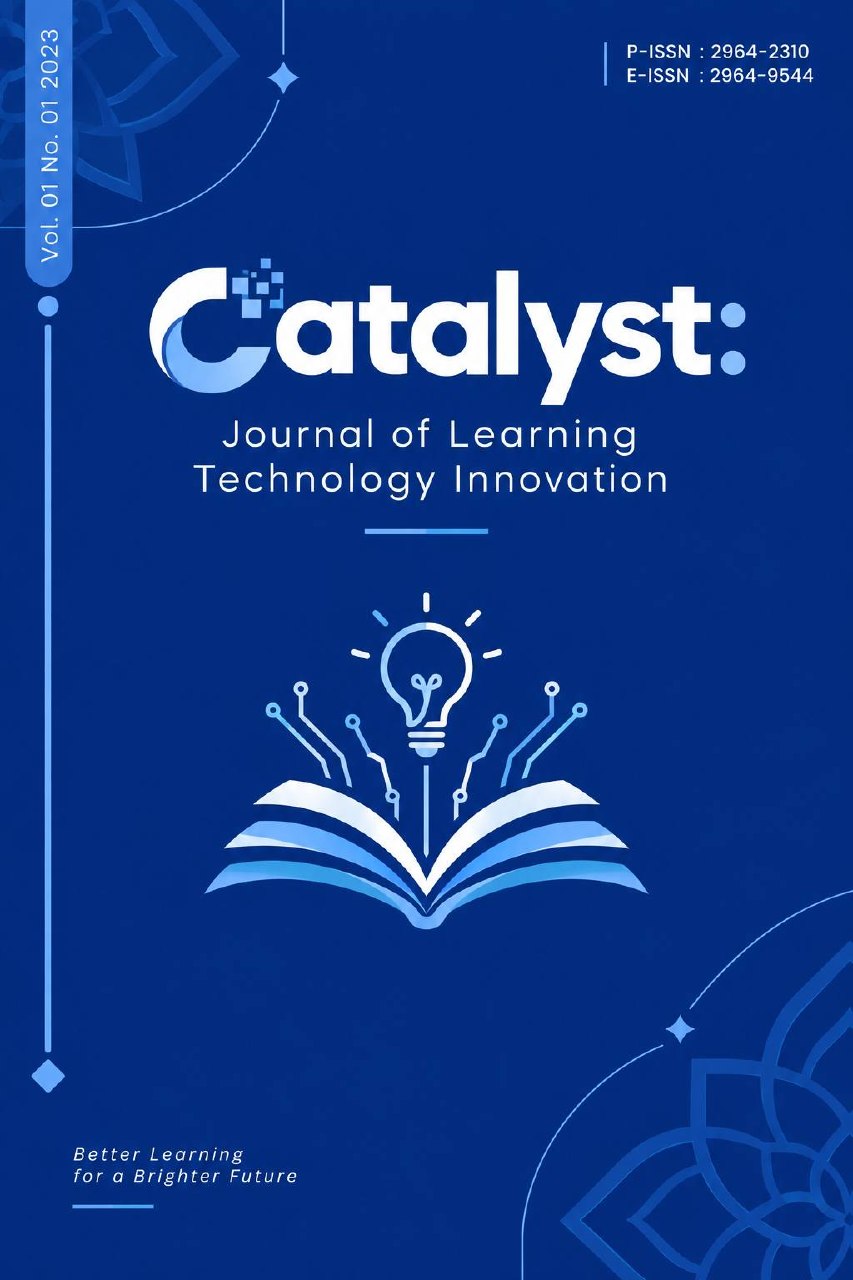
Catalyst: Journal of Learning Technology Innovation is a peer-reviewed academic journal published by Avicenna Institute, dedicated to advancing scholarly research, innovation, and critical discourse in the field of learning technology. The journal focuses on the integration of technology, pedagogy, and learning sciences to enhance educational processes, learning experiences, and academic outcomes across diverse educational settings. It provides an academic platform for researchers, educators, practitioners, technology developers, and policymakers to disseminate original research, theoretical perspectives, innovative practices, and critical analyses that contribute to the advancement of technology-enhanced learning.
The journal welcomes interdisciplinary studies addressing digital learning environments, educational technology integration, instructional design, innovative pedagogical approaches, online and blended learning, mobile learning, and technology-mediated education. Its scope also encompasses artificial intelligence in education, learning analytics, adaptive and personalized learning, digital literacy, virtual and augmented reality, gamification, educational software development, learning management systems, and emerging digital tools for teaching and learning. Furthermore, the journal encourages research on technology-supported assessment and evaluation, digital learning resources, inclusive and accessible education, teacher professional development, student engagement, collaborative learning, and the ethical, social, and pedagogical implications of emerging technologies in education.
Catalyst: Journal of Learning Technology Innovation encourages interdisciplinary contributions that connect learning technology with educational theory, instructional practices, information systems, cognitive sciences, educational management, and contemporary digital transformation. The journal accepts theoretical, conceptual, experimental, design-based, evaluative, qualitative, quantitative, and mixed-method research approaches, including systematic literature reviews and evidence-based case studies, that offer meaningful contributions to the development and application of learning technologies. By disseminating rigorous and innovative scholarship, the journal aims to foster academic collaboration, stimulate technological and pedagogical innovation, and promote evidence-based practices that enhance the quality, accessibility, effectiveness, and sustainability of learning in an increasingly digital and interconnected world.